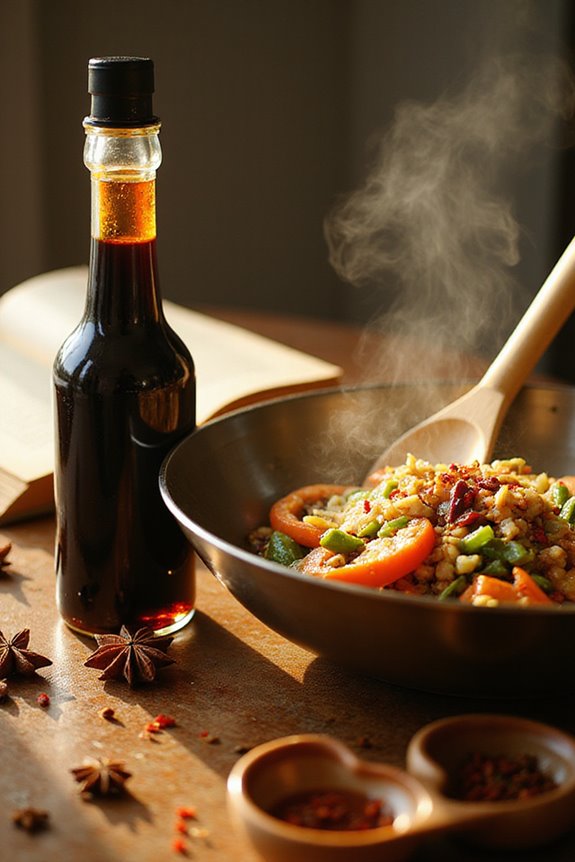


Substituting Asian ingredients can be a magical cooking adventure! Let’s start with soy sauce—coconut aminos give a delightful, sweet taste. Broccolini works wonders instead of gai lan, while regular cabbage can stand in for napa cabbage. For noodles, soba offers a nutty surprise, and for rice, quinoa is protein-packed! So, experiment and have fun creating festive dishes. And guess what? There are even more exciting swaps waiting for you to discover!
Key Takeaways
- Use coconut aminos as a 1:1 substitute for soy sauce in stir-fries or dressings for a lower-sodium alternative.
- Broccolini or asparagus can replace gai lan in recipes, maintaining flavor and texture.
- En choy or bok choy can serve as substitutes for spinach, bringing crispness and nutrition to dishes.
- For rice, quinoa or riced cauliflower can be utilized for a healthy, similar texture in Asian meals.
- Incorporate wakame or kombu to enhance umami flavors in soups and broths, elevating your dishes with authenticity.
Soy Sauce and Cooking Wine Alternatives
When we think about adding flavor to our dishes, soy sauce often comes to mind, but we can explore delightful alternatives that bring their own magic to our meals! One great choice is coconut aminos. With its slightly sweet, salty, and umami flavor, it offers fantastic *coconut aminos benefits*, like being lower in sodium and gluten-free. We can use it 1:1 in stir-fries or dressings!
Another fantastic alternative is tamari. Known for its rich, less salty flavor profile, it’s ideal for those avoiding gluten while still tasting heavenly in our favorite dishes. Additionally, we might consider experimenting with sesame oil, a versatile ingredient that adds depth and complexity to various dishes, making it a great addition to our flavor arsenal. So next time we whip up something delish, let’s not forget these tasty substitutes that will add a splash of excitement—like a festive holiday surprise—to our meals!
Substituting Fresh Vegetables and Roots
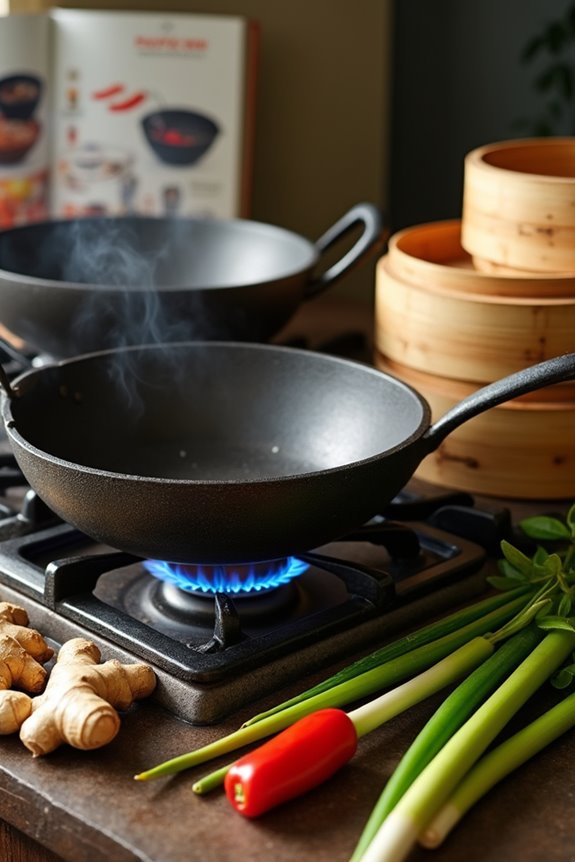
Substituting fresh vegetables and roots is an easy way to keep our meals exciting and flavorful, especially when we can’t find specific ingredients! Let’s explore some delightful fresh vegetable alternatives. For instance, if we can’t find gai lan, broccolini or asparagus works wonderfully. And if we have napa cabbage on hand, regular cabbage or wombok is a perfect backup.
When it comes to root vegetable replacements, kabocha squash can stand in for butternut squash. It brings a magical sweetness to warm dishes! Remember, we can jazz up our stir-fries by tossing in any fresh veggies available, like carrots or green beans, making for a vibrant and colorful dish. Additionally, keeping a cohesive color scheme in mind while substituting can enhance the visual appeal of your dishes. So, don’t be shy—let’s switch it up and enjoy cooking together!
Leafy Greens and Spinach Swaps
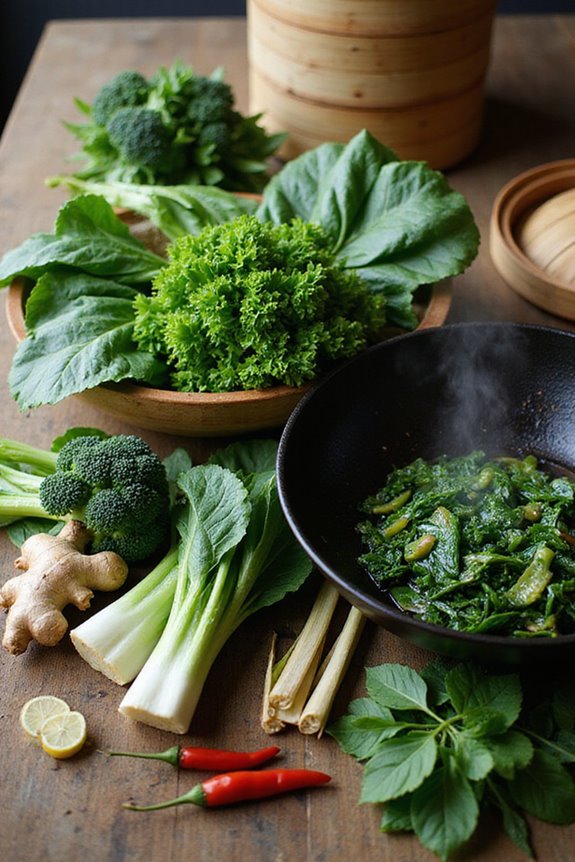
Leafy greens bring a delightful crunch and vibrant color to our dishes, but what if we can’t find spinach? No worries! We’ve got some magical substitutes that can bring their own unique flavor profiles and nutritional benefits to our meals.
- En Choy: Crisp with a similar taste to spinach, perfect for stir-fries!
- Bok Choy: Tender, crunchy, and packed with calcium—ideal for soups.
- Mustard Greens: A bit peppery; just balance ’em out with milder greens.
These leafy greens can easily be swapped into your favorite cooking methods. Whether we’re sautéing or tossing them in a salad, they’ll brighten our plates and nourish our bodies. Additionally, using available ingredients ensures that we can maintain authentic flavors while enjoying diverse dishes. So let’s explore and enjoy these delightful alternatives together!
Seaweed and Umami Enhancers

Seaweed isn’t just a tasty ocean snack; it’s a magical ingredient that can add deep umami flavors to our dishes! Let’s explore some delightful seaweed varieties and umami sources to enhance our meals.
- Gim (Korean laver) is a fantastic nori replacement.
- Wakame offers a sweet, silky texture in salads and soups.
- For a fun twist, we can use lettuce or cucumber as sushi wraps!
- If you’re feeling adventurous, adding kombu to broths will deepen that umami kick! Additionally, incorporating authentic Korean flavors like gochugaru can elevate the taste profile of your dishes.
Rice, Noodles, and Staples Substitutions
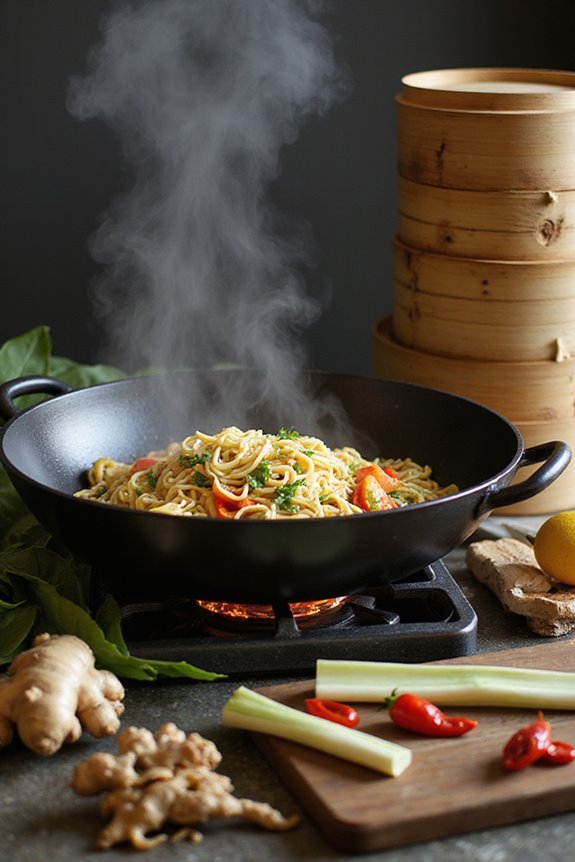
When we’re cooking up our favorite Asian dishes, we often find ourselves reaching for rice and noodles as staples. But if we need a tasty change, we’ve got delightful options!
For rice, consider:
- Quinoa: A protein-packed treasure with grain-like rice texture.
- Riced Cauliflower: Super low-calorie at just 13 calories per ½ cup; it’s magical!
- Coconut Rice: Just add coconut milk to your regular rice for that creamy flair!
When it comes to noodle variations, we can swap in:
- Soba Noodles: For a nutty surprise.
- Glass Noodles: Perfectly gelatinous for soups!
Let’s get creative and have fun experimenting. Substituting can add a fresh twist to our beloved dishes! For example, if you want to achieve that perfect rice texture, consider using a rice cooker for optimal results.
Frequently Asked Questions
Can I Use Table Salt Instead of Soy Sauce?
We wouldn’t recommend using table salt instead of soy sauce. While both add saltiness, soy sauce offers rich umami flavor and depth that table salt simply can’t match. Let’s embrace the unique taste soy sauce brings!
What Can Replace Sesame Oil in Recipes?
In our culinary garden, where flavors flourish, sesame oil’s essence can be replaced by alternative oils like walnut or perilla. Let’s explore these treasures, enriching our dishes and connecting to each other through shared tastes.
Is There a Substitute for Wasabi?
If we’re looking for wasabi alternatives, horseradish works great for heat. We can also create homemade wasabi by mixing horseradish and mustard powder. Let’s explore these options together for our next dish!
How Do I Replicate the Flavor of Fish Sauce?
When we’re trying to replicate that savory complexity of fish sauce, we can mix soy sauce with anchovy paste, or use various umami flavor enhancers. Finding the right balance is key to achieving that depth together.
Can I Use Regular Vinegar for Rice Vinegar?
Absolutely, we can use regular vinegar for rice vinegar in a pinch, but let’s remember that rice vinegar types have unique flavor profiles. It’s best to dilute regular vinegar for a milder taste that won’t overpower our dishes.