As an Amazon Associate, we earn from qualifying purchases. Some links on this site are affiliate links at no extra cost to you. Our recommendations are based on thorough research and editorial judgment.

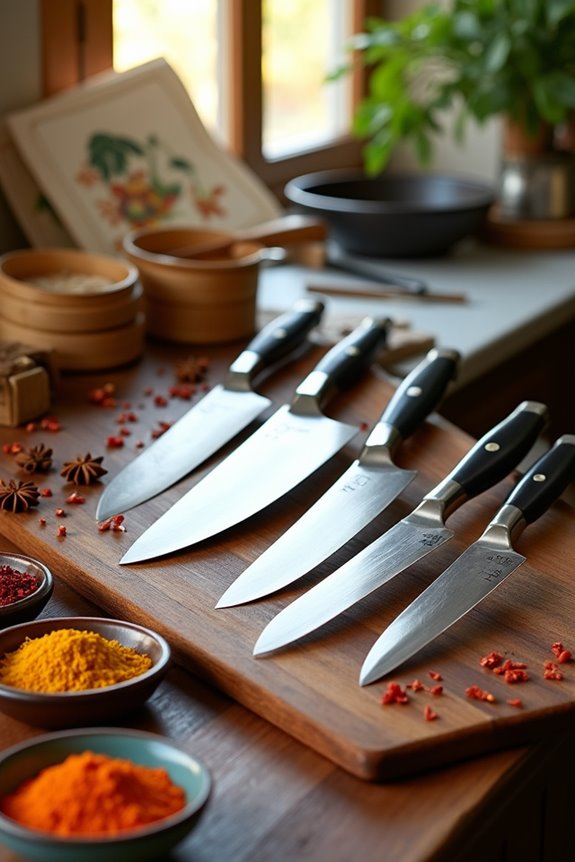
How Do I Choose The Right Knife Size?

Choosing the right knife size can feel magical! Start by measuring your hand: from the fingertip to the palm crease for length and across the palm for width. As a fun rule, forearm length can guide us—an 8-inch knife is perfect for most! Don’t forget to test different weights and grips for that delightful feel. Remember, the knife should be an extension of you. You’ve got this, and there’s more exciting information just around the corner!
Key Takeaways
- Measure your hand length from fingertip to palm crease and hand width at the widest part for proper knife size matching.
- Use forearm length to guide knife size selection; typically, an 8-inch knife suits average forearm lengths.
- Test different knife grips to find one that fits snugly, improving comfort and reducing fatigue during use.
- Check the knife’s balance by holding it at the handle, ensuring it feels stable and easy to maneuver.
- Consider weight distribution; lighter knives offer agility while heavier ones provide strength, so choose based on personal preference and intended use.
Understanding Blade Length and Hand Size Correlation
When we think about choosing the perfect knife, we often overlook the magical connection between blade length and our hand size. It’s not just a simple choice; it’s about how our hand dimensions influence comfort and control!
To get the most out of our culinary adventures, consider these key points:
- Blade Length: Match it to your hand size for better grip.
- Handle Length: Ideally, it should match your hand width.
- Grip Comfort: A proper fit means less fatigue while chopping veggies for a holiday feast! Additionally, selecting knives made of high carbon stainless steel can enhance your overall cutting experience, ensuring sharpness and durability throughout your culinary tasks.
Using Forearm Length as a Guide for Chef Knife Size
Have you ever wondered how to pick the perfect chef knife that feels just right? Well, let’s use our forearm length as our magic measuring stick! Simply measure from your wrist to your elbow, and that’s your ideal knife size. A delightful 8-inch knife usually matches average forearm lengths, while a 6-inch knife suits shorter arms—perfect for those delicate chopping tasks.
Here’s a quick tip: when in between sizes, always round down for better control. This helps guarantee our knife feels like an extension of our arm. Knife balance is key, making our cooking experience smoother and reducing fatigue. With the right size, we’ll tackle any recipe like kitchen superheroes! Additionally, a well-balanced knife contributes to better control, enhancing efficiency while preparing ingredients. Now, let’s get slicing!
Categories of Folding Knife Blade Length
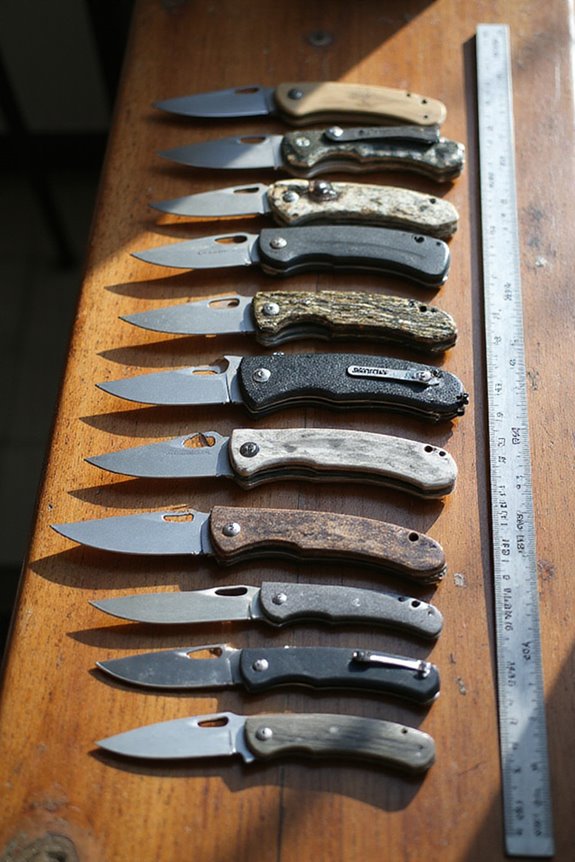
Folding knives come in a magical variety of sizes, each designed for different tasks and adventures! Let’s explore the exciting blade length categories of folding knife types.
- Small Blades (Under 2.75 inches): Perfect for light tasks like opening presents or cutting threads. They’re discreet and ideal for office settings!
- Medium Blades (2.75 to 4 inches): These are our trusty sidekicks for everyday carry, merging portability with power. Great for camping and food prep!
- Large Blades (Over 4 inches): If you’re gearing up for outdoor survival, these hefty blades offer cutting strength for heavier tasks. Premium knife sets often include essential knives that cater to various culinary needs.
Choosing the right size matters! So, think about your adventures and pick wisely to match your style and needs. Happy exploring!
Recommended Products

DURABLE EDC GEAR: The Gerber EAB Lite pocket utility knife features an easily replaceable contractor-grade utility razor blade, secure liner lock, and integrated money clip for everyday carry convenience

DIMENSIONS: 7.1 Inch (18 Cm) Overall Length With A Blade Length Of 3.1 Inches (7.9 Cm) And A Weight Of 3.5 Ounces

TAC-FORCE Every Day Carry Rescue Style Folding Pocket Knife.
Selecting Pocket Knife Size for Everyday Carry (EDC)
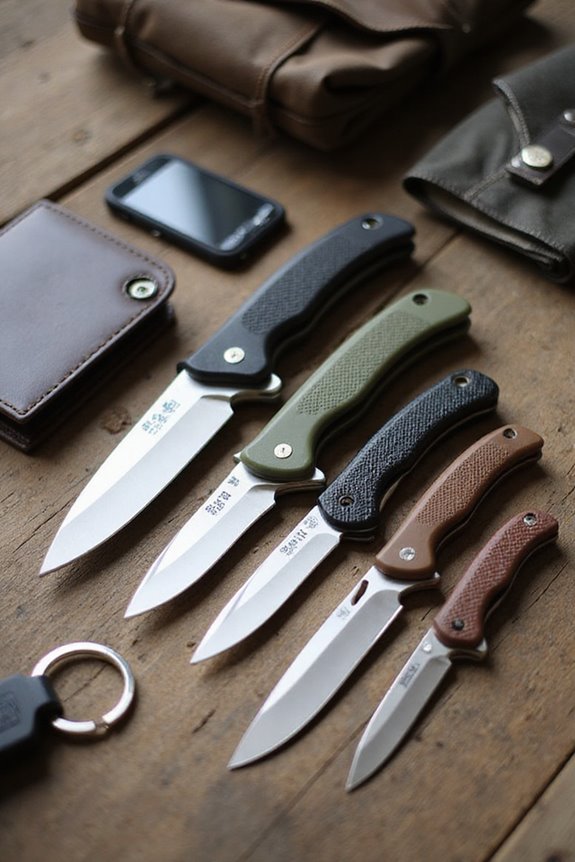
Selecting the perfect pocket knife size for everyday carry (EDC) can feel a bit like choosing the right size of holiday cookie cutters—too big, and you can’t use them for those intricate gingerbread houses; too small, and you might miss out on making some epic treats! We want our knife to fit comfortably in our pocket without feeling bulky.
- Lightweight & Portable: Knives under 3.75 inches disappear in pockets and are easy to carry.
- Versatile Use: A medium knife (around 3.75-4.25 inches) balances size and function for everyday tasks.
- Material Matters: Consider blade materials for durability without added knife weight. Additionally, high hardness ratings contribute to better cutting performance, enhancing the utility of your knife selection.
Recommended Products

Tanto Blade: Featured great hardness and excellent corrosion resistance 7CR13Mov stainless steel sharp blade, this slim tanto knife is good for puncturing and piercing. It’s a nice edc knife with smooth action, solid blade and strudy frame.
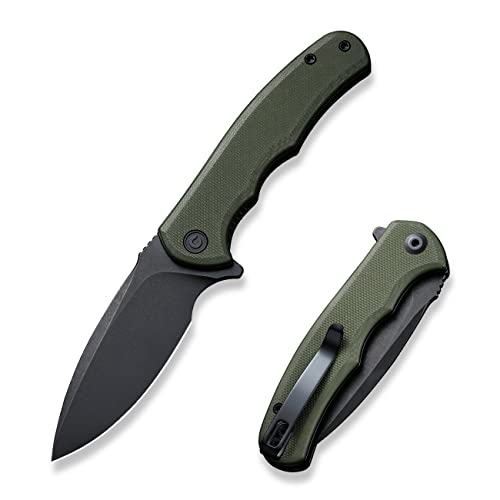
CIVIVI MINI PRAXIS --- Constructed from black stonewashed D2 steel that perfectly blends edge retention, corrosion resistance, and ease of sharpening. This folding knife with the handy pocket clip is the ideal option for everyday carry that is legal in all states and will stay strong through all of your adventures.
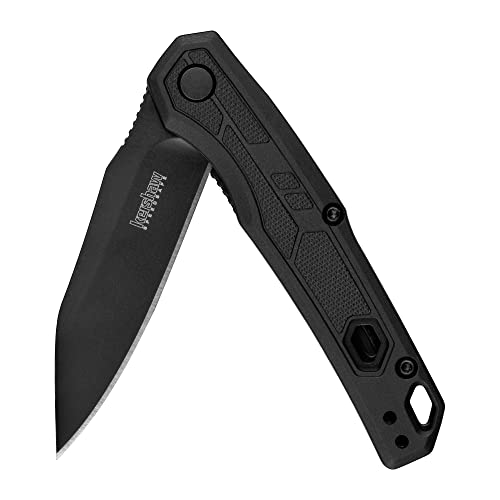
APPA POCKET KNIFE: The Kershaw Appa combines tactical style and strength with its all-black design and reverse tanto blade, making it the perfect lightweight tactical knife for a variety of everyday tasks.
Ergonomics and Control Factors Beyond Size
When we think about using a knife, it’s not just about the size—it’s all about how it feels in our hands too! Imagine wielding a knife that has perfect blade balance; it makes every cut a delightful experience. The grip texture is just as essential—textured handles keep our fingers secure, even when things get a little slippery!
Here are a few things to take into account:
- Weight Distribution: Knives that are well-balanced reduce fatigue, letting us chop like culinary wizards.
- Shape Matters: Different blade shapes can enhance our cutting precision. Additionally, choosing utensils with ergonomic design features can significantly improve comfort and safety while wielding a knife.
The Importance of Handle Size and Grip
The right handle size and grip can make our cooking adventures feel like a walk through the enchanted forest of flavors! An ergonomic design guarantees comfort and reduces fatigue, making every chop a delightful experience. A secure grip is crucial—especially with those sharp blades!
Key points to reflect on:
- Hand Size Matters: Choose a handle that fits snugly in your palm.
- Contour for Comfort: Grooves can enhance grip but may limit movement—choose wisely!
- Material Choice: Wooden and composite handles provide durability and feel magical during use. Additionally, choosing ergonomic handles can improve overall cooking experience and help prevent wrist and hand fatigue.
Let’s ponder how our grip styles—like a solid handshake or a dainty wave—affect our control. With the right handle, each slice feels like a little celebration in our kitchen!
Types of Knives and Their Ideal Sizes
Understanding the different types of knives and their ideal sizes can turn our kitchen into a magical wonderland of cooking possibilities! Let’s explore some must-have knives:
- Paring Knife: 2.5 to 4 inches, perfect for fruits and veggies.
- Utility Knife: 5 inches, great for slicing small items.
- Chef’s Knife: Ranges 6 to 14 inches, our kitchen superstar for all tasks!
- Cleaver Knife: 9 to 12 inches, for those heavy-duty chops.
Keep in mind, knowing your knife material types can help with knife maintenance tips. Proper care guarantees these delightful tools stay sharp, making every dish even more irresistible. So grab your favorite knife, and let’s get cooking together!
Recommended Products

【15 Pieces Multipurpose Knife Set】 15 pieces knife set includes: 8" Chef knife, 8" Slicing knife, 7" Santoku knife, 8" Serrated bread knife, 5" Utility knife, 3.5" Paring knife, 6 Pcs 4.5" serrated steak knife, 1 Pc kitchen shear, and Black hard wood Knife Block with built-in Knife Sharpener.

CAROTE Knife Set Precise lasers ensure each blade edge is at the optimal cutting angle for sharpness. It brings efficiency to save more time in everyday food preparation.

【AESTHETIC KITCHEN UPGRADE】 Warm wood grain handles and a sleek black knife block make this set a countertop centerpiece — a seamless blend of modern style and everyday function that elevates any kitchen aesthetic.
How to Measure Your Hand and Forearm for Accuracy
Measuring our hands and forearms might sound a bit like preparing for a magical cooking challenge, but trust us, it’s essential for finding the perfect knife! Let’s explore some hand measurement techniques.
- Hand Length: Measure from the tip of your middle finger to the crease at your palm.
- Hand Width: Measure across the widest part of your palm.
- Forearm Length: Measure from your wrist to elbow.
With these forearm measurement methods, we can match knife sizes for ideal control. If your forearm’s a tad short, round down when picking knife sizes! Remember, the right fit can make our cooking experiences feel delightful and seamless—like whipping up a holiday feast with friends!
Visual Tools for Knife Size Selection
Finding the perfect knife isn’t just a matter of picking one up off the shelf; it’s about visualizing how that knife fits into our daily cooking adventures! We can use delightful visual comparisons and size charts to make informed choices.
Recommended Products

MISDIRECT POCKET KNIFE: Part of Kershaw's Everyday Starter Series, the Misdirect is a durable, easy-to-use assisted opening pocket knife with a reverse tanto blade and stainless steel handle.

QUALITY CRAFTED: Features a stainless steel, plain edge blade, textured grip, liner lock, reversible thumb stud, and reversible pocket clip

Premium 14C28N Stainless Steel Blade: 3.46-inch (88mm) blade with exceptional sharpness and corrosion resistance, ideal for cutting, slicing, and outdoor tasks
Size Categories to Keep in Mind:
- Micro EDC: Under 2.3 inches, perfect for light tasks.
- Small EDC: 2.3 to 2.7 inches, a lovely balance of size and function.
- Mid-size EDC: 2.7 to 3.4 inches, versatile and compact.
- Full-size EDC: 3.4 to 4.0 inches, great for heavier tasks.
- Large EDC: Over 4.0 inches, maximum cutting power!
Let’s use images and diagrams to visualize our ideal knife size. It’s going to make our cooking experience magical!
Testing Knives for Comfort and Suitability
Have you ever wondered how a knife’s feel can transform your cooking experience? Selecting the right knife isn’t just about sharpness; it’s also about knife comfort and task suitability. Here are some delightful ways to test:
- Grip Size: Make sure it fits your hand like a glove!
- Balance: A well-balanced knife dances in your hand—no tug-of-war here!
- Ergonomic Design: Look for handles that hug your hand during holiday prep marathons.
We should also consider:
- Weight Distribution: Feel the magic in how it handles.
- Testing after Repeated Use: Does it still feel right, even after slicing multiple onions?
Choosing a knife that just feels right makes all the difference in the kitchen! Enjoy the journey of finding your perfect match.
Recommended Products

【Forged for Performance, Designed for Ease】We honor and advance traditional hand‑forging craftsmanship. Each blade in this 2 pcs kitchen knife set undergoes high‑temperature treatment, hand hammering, quenching, and precision sharpening, before being fitted with a solid wood handle. Made from high‑quality stainless steel, every knife guarantees lasting sharpness, corrosion resistance, and a reliable hardness of 60 ± 2 HRC.

Ergonomic L Shaped Design – Created by a Certified Occupational Therapist, these right angle knives feature an angled handle to minimize wrist strain and promote a natural, comfortable grip.

COOK WITHOUT PAIN. Designed specifically for arthritis, carpal tunnel, RSI and reduced grip strength. The arc center handle transfers force through your forearm instead of your wrists and fingers, so you can chop, slice, and mince with less strain and more control.
What Types of Tasks Require Specific Knife Sizes?
When we tackle our culinary adventures together, knowing the right knife size makes a difference. For slicing vegetables and chopping herbs, smaller blades enhance precision, making our meals more enjoyable and our kitchen feel like home.
How Do I Know if a Knife Is Too Heavy?
When we consider if a knife’s too heavy, we should pay attention to its balance and our personal preference. If we experience discomfort or fatigue during use, it may be time to reassess our choice.
Can I Use a Chef Knife for Small Tasks?
Absolutely, we can use a chef knife for small tasks! Its versatility makes it efficient for anything from mincing herbs to slicing garlic, ensuring we enjoy every moment in the kitchen together, effortlessly creating delicious meals.
Are There Laws Regarding Knife Sizes in My Area?
When we explore knife laws, we must consider local regulations. Each area has unique rules regarding knife sizes, so it’s important we check our local laws to guarantee compliance and stay safe.
How Often Should I Replace My Kitchen Knives?
We should replace our kitchen knives when they show significant wear, rust, or discomfort. By prioritizing knife maintenance, we can guarantee longevity, keeping our tools safe and effective for years of cooking adventures together.