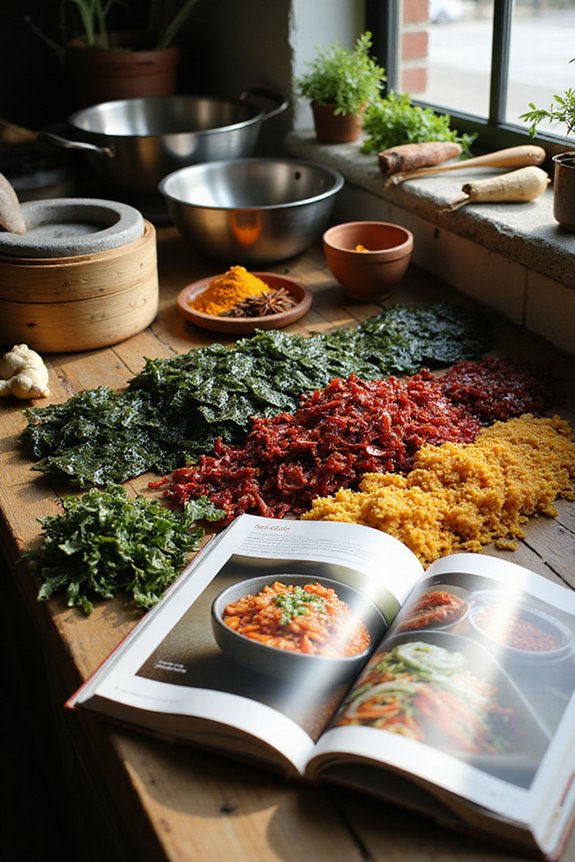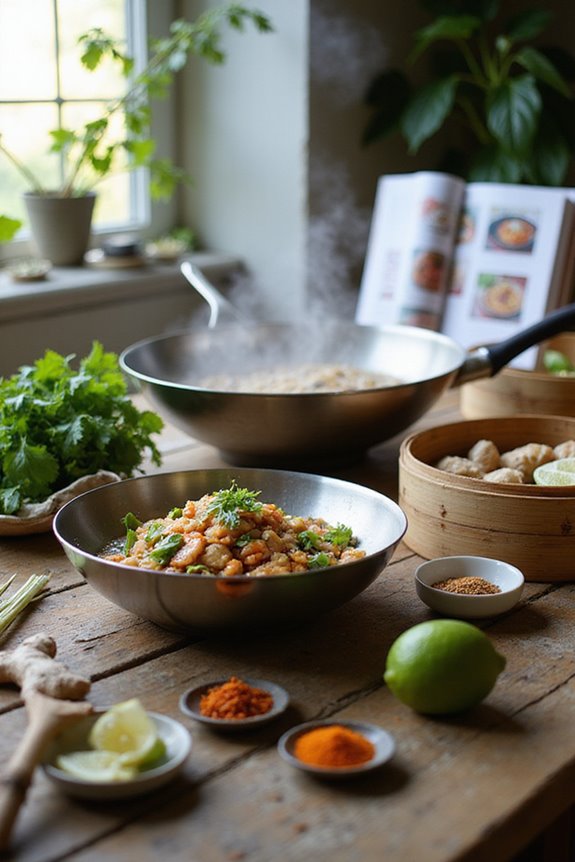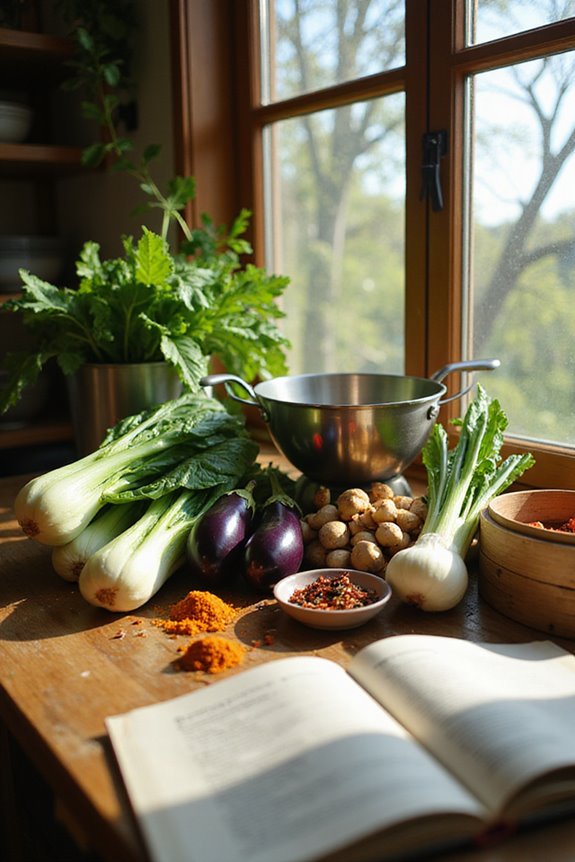
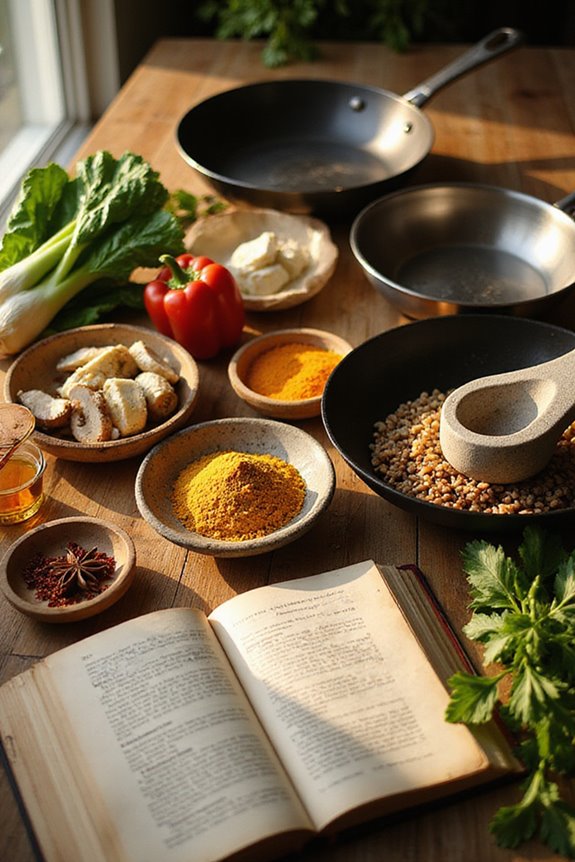

Let’s whip up some delightful heart-healthy Asian food! We’ll start by selecting whole grains like brown rice or quinoa, and pair them with plant-based proteins like lentils or chickpeas. Next, let’s choose unsaturated oils for cooking, like canola, and spice things up with fresh herbs and zesty flavors instead of salt. Adding colorful veggies and omega-3-rich seafood like salmon or mackerel will amp up our meals’ nutrition! Trust us, your tastebuds will thank you as we explore more tasty options!
Key Takeaways
- Use whole grains like brown rice or quinoa as the base for meals to increase fiber and nutrient intake.
- Incorporate plant-based proteins such as lentils or chickpeas to create balanced, heart-healthy dishes.
- Choose unsaturated oils, like canola or peanut oil, for cooking to boost healthy fat content.
- Limit sodium by utilizing low-sodium soy sauce and enhance flavors with fresh herbs and spices.
- Fill your plate with a colorful variety of fresh vegetables to maximize nutrient density and visual appeal.
Selecting Whole Grains and Plant-Based Proteins
When we think about heart-healthy eating, selecting whole grains and plant-based proteins can feel like a delightful adventure in the kitchen! Let’s explore some magical whole grain varieties like brown rice, quinoa, and farro. These options are packed with fiber and nutrients, making them essential for reducing heart disease and diabetes risk. Incorporating flavorful adventure with ingredients such as soy sauce and ginger can create a delicious and heart-healthy Asian-inspired dish.
Incorporating plant-based proteins is just as fun! Pair those whole grains with lentils or chickpeas for a complete meal that’s both nutritious and satisfying.
Choosing Healthy Cooking Oils and Low-Fat Dairy Alternatives

Eating heart-healthy doesn’t stop at whole grains and plant-based proteins; we’ve got another exciting layer to explore! Let’s plunge into choosing the right oil types and low-fat dairy alternatives to keep our meals delicious and good for our hearts.
- Go for unsaturated oils like canola and peanut oil; they’re rich in healthy fats!
- Sesame oil adds delightful flavor, but remember to use it sparingly—it’s like a tiny party guest that packs a punch!
- For dairy, consider silken tofu or low-fat soy milk instead of heavy creams; they’re wonderfully versatile. Integrating low sodium options into your cooking allows you to enhance flavors while maintaining heart health.
Emphasizing Seafood and Omega-3 Fatty Acids

Seafood can be a delightful superstar in our heart-healthy meals, especially when it’s packed with omega-3 fatty acids! These magical nutrients are linked to numerous seafood benefits, from boosting our heart health to supporting brain function. Let’s discover some fantastic omega-3 sources.
- Mackerel: Over 2,200 mg per serving!
- Salmon: A versatile choice with around 1,200 mg.
- Sardines: A tasty powerhouse!
- Tuna: Contains 500 mg—great for sushi!
- Trout: Offers 600 mg per serving.
For heart-healthy dishes, think teriyaki salmon rice bowls or spicy salmon egg rolls. Regularly including these meals can create culinary joy and foster our health. Additionally, incorporating quick and nutritious recipes can enhance your cooking experience. Let’s plunge into deliciousness and revel in the benefits of seafood together!
Limiting Sodium and Using Herbs and Spices for Flavor

While we all love the robust flavors of Asian cuisine, it’s essential to keep our sodium intake in check for heart health. Here are some delightful sodium alternatives for flavor enhancement:
- Swap out regular soy sauce: Use low-sodium soy sauce or coconut aminos—it’s about 360 mg sodium per tablespoon!
- Create a tasty blend: Mix low-sodium soy sauce with pineapple juice for a flavor blast!
- Ditch the seasoned: Use unseasoned rice vinegar for cooking.
Let’s spice things up! Replace salt with ginger, garlic, or chili for zesty fun. Fresh herbs like cilantro and basil not only look lovely but also add unique flavors. Additionally, incorporating low sodium miso pastes into your dishes can enhance flavor while supporting gut health. Enjoy experimenting—just think of it as a culinary treasure hunt! Happy cooking!
Focusing on Fresh Vegetables and Balanced Portions

When we immerse ourselves in the world of Asian cooking, fresh vegetables are our magical allies in crafting heart-healthy meals! By featuring vibrant vegetable varieties like broccoli, bok choy, and bell peppers, we can enjoy delightful dishes packed with nutrient density. Let’s embrace the joy of combining colors and flavors, making our meals not just healthy but visually appealing! To support our cooking endeavors, we should consider soil quality and type to ensure we choose the best vegetables for our meals.
To keep things heart-smart, we should focus on balanced portions. Aim for a bigger plate of veggies alongside moderate servings of lean protein, like chicken or tofu. Quick stir-frying and light steaming are our best friends for preserving nutrients. With a sprinkle of garlic or ginger, we’ll boost flavor without extra calories. Let’s celebrate our hearts with every colorful bite!
Frequently Asked Questions
What Are Some Easy Asian Recipes Using Whole Grains?
When we think of easy Asian recipes using whole grains, quinoa stir fry and brown rice bowls come to mind. They’re delicious, nutritious, and perfect for bringing us together around the table, sharing wholesome meals.
How Can I Incorporate Plant-Based Proteins Into My Meals?
To incorporate plant-based proteins into our meals, we can explore tofu alternatives like tempeh and seitan. Plus, we’ll enjoy the legumes’ benefits, adding flavor and nutrition for heart-healthy, satisfying dishes together!
What Are Healthy Dessert Options in Asian Cuisine?
Imagine sharing a cozy afternoon, savoring green tea alongside mango sticky rice. In Asian cuisine, we’ve got delightful, heart-healthy desserts like these that celebrate natural ingredients, making our gatherings both delicious and nourishing for everyone.
Can I Use Frozen Vegetables Instead of Fresh Ones?
Absolutely, we find that using frozen vegetables has great benefits! When we compare vegetable nutrition, frozen options often match fresh ones, making them a convenient choice that helps us all embrace healthier eating together.
How Can I Meal Prep Heart-Healthy Asian Dishes?
When we’re meal planning, let’s embrace ingredient substitutions for a healthier twist! We can prepare proteins, vibrant veggies, and wholesome grains together, creating delicious and heart-healthy Asian dishes that enrich our tables and nourish our hearts.