As an Amazon Associate, we earn from qualifying purchases. Some links on this site are affiliate links at no extra cost to you. Our recommendations are based on thorough research and editorial judgment.

What’s The Proper Way To Blanch Vegetables?

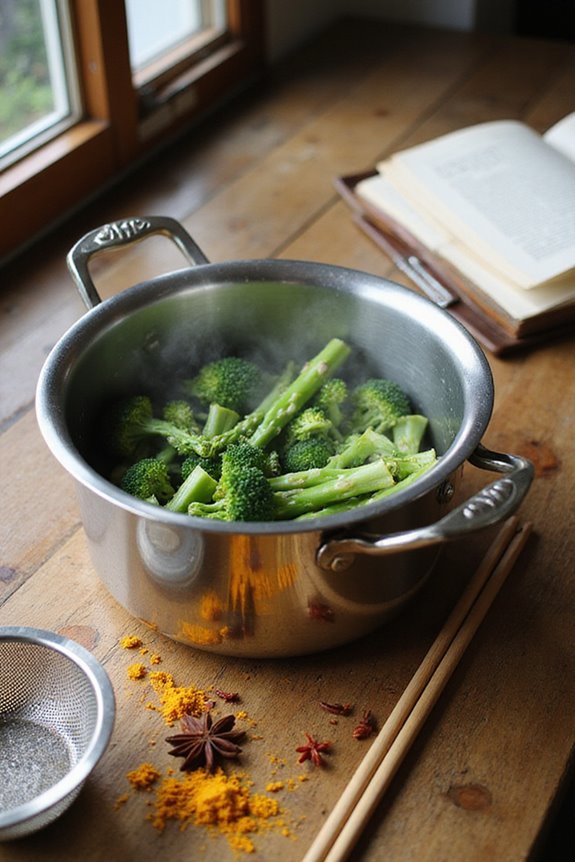
Blanching vegetables is our magical way to lock in color and crunch! First, we prep veggies by cutting them evenly and getting our big pot of water boiling. Next, we drop those delightful bites in for 1-3 minutes. Remember, timing is everything! Afterward, we cool them in an ice bath to stop the cooking process. Voilà, vibrant veggies ready for any feast! Stick with us to uncover more fantastic tips and tricks for your kitchen adventures!
Key Takeaways
- Cut vegetables uniformly to ensure even cooking and maintain bite-sized portions for optimal blanching results.
- Use either water or steam blanching methods, ensuring proper equipment like large pots and baskets.
- Blanch vegetables in batches, timing them for 1-3 minutes based on their type, to avoid overcooking.
- Immediately transfer blanched vegetables to an ice bath to stop cooking, preserving texture, color, and nutrients.
- Drain excess water after shocking to prevent sogginess and maintain the vegetables’ crispness.
Preparation Before Blanching
Before we plunge into blanching, let’s get everything set up like a festive kitchen party! First, let’s talk cutting techniques. We want our veggies to be uniformly cut so they cook evenly—think bite-sized treats! Grab your sharp knives and get chopping, trimming stems, and peeling as needed.
Next up is equipment selection. Make sure you’ve got the right tools in your arsenal: a pot big enough for a single layer of veggies, steaming baskets, and a generous bowl filled with ice water to cool things down post-blanching. Remember, cozy is key, so no overcrowding! To make your prep even easier, consider using a bamboo cutting board set that promotes sustainability and enhances your kitchen experience.
Recommended Products
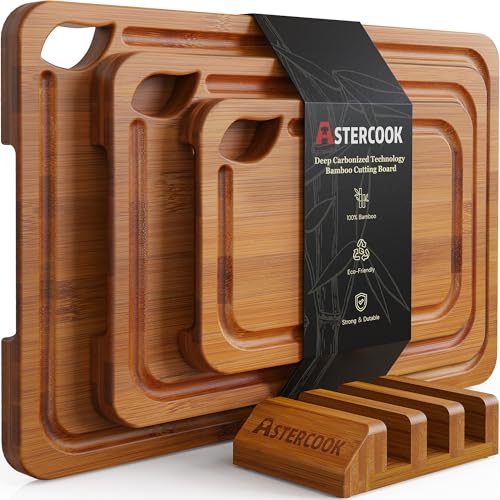
【Deep-Carbonized Bamboo for Lasting Strength】 Crafted from premium bamboo and treated with high-heat carbonization, this wood cutting board set resists warping, cracking, and water absorption. Stronger than standard cutting boards for kitchen, it protects knife edges and stays smooth through years of everyday use.

EXTRA DURABLE - We use rare Vertical Grain construction, unlike our competitors, giving you heavy-duty wooden cutting boards for kitchen that can withstand heavy daily abuse and are resistant to cracking, warping and splitting

BAMBOO CUTTING BOARD of 3 - Keechee bamboo cutting boards for kitchen include 3 practical sizes: 15×10 in, 12×8 in, and 9×6 in, giving you the right board for every task. Use the large board for meat prep or serving, the medium for vegetables and fruits, and the small for bread, cheese, or quick slicing. This multi-size set replaces single boards and makes everyday cooking more organized and efficient.
Water Blanching Method
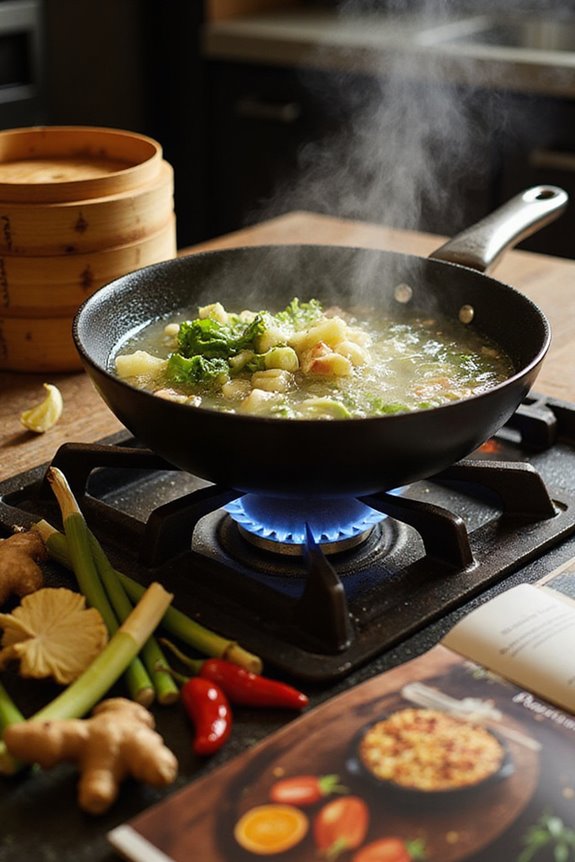
Water blanching is a delightful cooking technique that’s like giving your vegetables a spa treatment before their big culinary debut! To start, we’ll bring a large pot of water to a gentle boil. Let’s carefully add our chosen veggies, like broccoli and carrots, in batches to keep that water sizzling hot. This magical process lasts just 1-3 minutes—remember, timing is key!
Next, we’ll plunge our blanched gems into an ice bath for a quick chill; about one pound of ice for each pound of veggies will do the trick. This step preserves their vibrant colors and crisp textures—definitely one of the many blanching benefits! In fact, blanching helps retain nutrients and flavor, making it an important technique in nutrient retention for health-conscious meals! Now we’re ready to elevate our dishes with perfectly prepared vegetables!
Recommended Products

Comfort grip, high-heat handle

[No Sink Needed]: The Tenta Tenta kitchen Pasta Strainer Insert Boil Basket you can drain cooked pasta and blanched vegetables directly over the pot

【 With 2 silicone gloves 】- This vegetable steamer basket not only dishwasher safe, but also includes 2 silicone gloves, making it a convenient and valuable addition to your kitchen essentials.
Steam Blanching Method
Steam Blanching Method
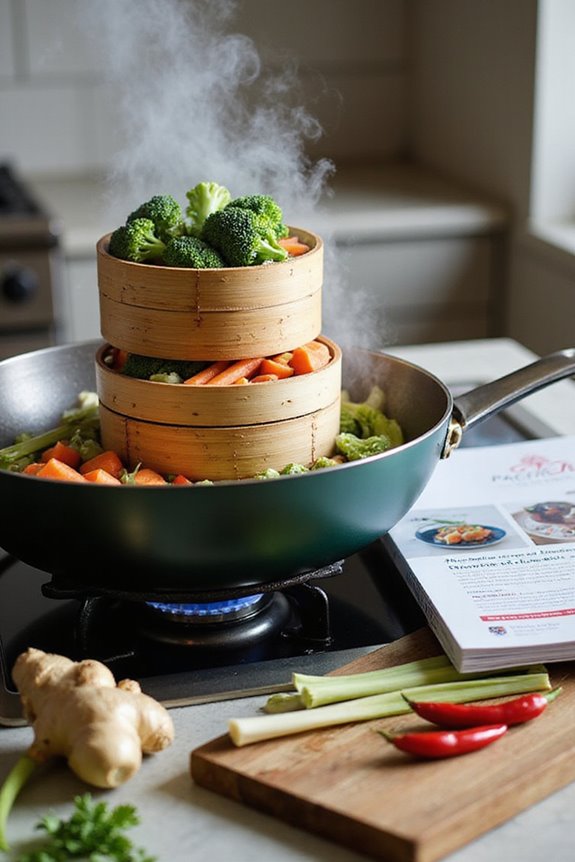
When it comes to steam blanching, we’ve got a delightful technique that helps us preserve the vibrant colors and crunch of our favorite veggies! This method brings out the steam benefits, ensuring more nutrients stay locked in. Let’s gather our deep pot, wire basket, and let’s make it happen!
- Layering Is Key: We need to keep our veggies in a single layer for even steam distribution.
- Boiling Water: Never skimp on water—we should be boiling enough to keep our basket above the line.
Additionally, using tempered glass lids can provide visibility during the steaming process, which helps prevent overcooking. Careful now! Common mistakes include overcrowding or letting the basket touch the water. Let’s remember to cool them quickly after blanching in an ice bath—no one likes soggy veggies! Happy steaming!
Recommended Products
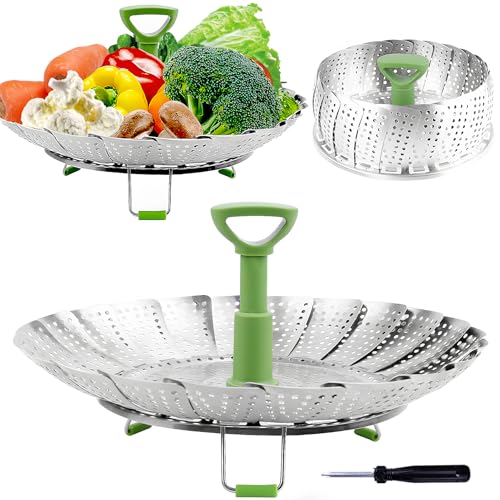
Healthier cooking choices: The steamer basket with high quality stainless steel petals, food grade plastic handle and silicone feet will promote your health. It is non-rust, scratch proof and corrosion resistant, easy to clean for long use. Steaming is a healthy cooking choice because it helps retain more than 90% of the nutrients lost when either boiling or microwaving food. The foldable steam basket can be used to steam veggies, seafood, eggs, meats, desserts, baby food and much more

【UPGRADE DESIGN & QUALITY 】- The steamer basket with premium food grade stainless steel petals design, Steaming is a healthy cooking choice because it helps retain more than 90% of the nutrients lost when boiling.

[PREMIUM QUALITY MATERIAL] - The foldable steamer basket is made of food grade stainless steel, which is rustproof, harmless and durable. The holes on steamer basket are for easy steaming and draining.
Timing and Avoiding Over- or Under-Blanching
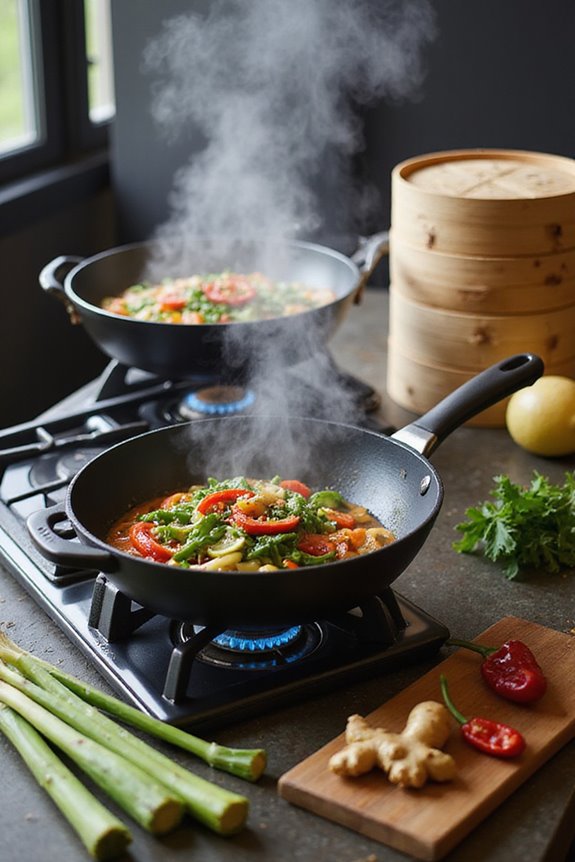
Timing plays a magical role in the blanching process, ensuring our vibrant veggies retain their delightful color and crispness. To nail it, we should start the timer only after the water returns to a full boil. Here’s what to remember:
- Vegetable Variety Matters: Different veggies have different blanching times. Leafy greens blanch faster than chunky Brussels sprouts!
- Over-Blanching Risks: Too long, and they become soggy and sad-looking. We don’t want mushy peas at our dinner table!
- Under-Blanching Blues: This leaves enzymes active, accelerating spoilage—yikes! Aim for enzyme inactivation to keep flavors intact. Additionally, using the right cooking utensils can improve efficiency and comfort in the blanching process.
Recommended Products

Count up & Countdown timer. You must want a reliable timer to know when to start or stop clearly. This new digital kitchen timer features Loud/Silent mode, On/Off switch, Large screen and Buttons with clear markings for ease of use

【No Battery Required & Easy to Use】 The mechanical kitchen timer doesn’t require any batteries, it is energy saving and eco-friendly. Just wind it up and set time, it will work. It is small and compact, you can carry it with you anywhere.

Count up & Countdown timer. You must want a reliable timer to know when to start or stop clearly. This new digital kitchen timer features Loud/Silent mode, On/Off switch, Large screen and Buttons with clear markings for ease of use
Cooling Process (Shocking)
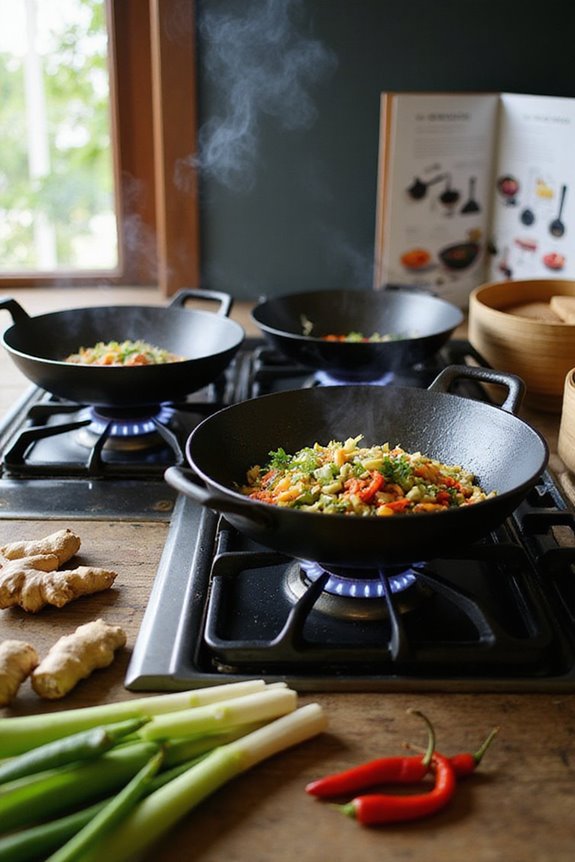
After we’ve blanched our vibrant veggies, it’s time to take them on a cool, invigorating adventure—this is where the cooling process, or shocking, comes in! We’ll create a delightful ice bath using a 50/50 mix of ice and water, ensuring our veggies are fully submerged. This magic stops the cooking process, preserving their bright colors and crunch. Plus, it’s pivotal for nutrient retention, keeping those healthy vitamins in check! Additionally, just as proper water management systems are crucial for maintaining plant health in indoor gardening, using ice water effectively halts the cooking process and locks in freshness.
To keep things running smoothly, let’s use tongs or a skimmer to transfer our tender greens from hot to cool in a flash. After shocking, drain excess water with a colander—no one wants soggy veggies! With this step, we’re all set for delicious storage or further cooking adventures. Happy cooking!
Recommended Products

QUALITY CONSTRUCTION: Crafted with one piece construction 18-8 stainless steel for strength and durability

ICE TONGS FOR COCKTAIL PARTIES - Nothing says classy like an ice bucket with ice tongs. Set up an ice station at your next party so guests can refill their own drinks with these 6 inch long ice tongs to keep the ice clean.

Package Includes: you will receive 1 silver ice tongs for sugar cubes, which combines practical function with elegant style; It is an ideal kitchen accessory and also suitable for home entertaining, such as tea parties, dinners, weddings and other occasions
Can I Blanch Mixed Vegetables Together?
When it comes to mixed vegetable blanching, we can try it, but we should remember that different blanching times can lead to uneven results. It’s best to prioritize vegetables with similar cooking requirements for success!
How Do I Know if Vegetables Are Properly Blanched?
We can know vegetables are properly blanched by checking their vibrant color retention and tender-crisp texture preservation. If they look bright and feel firm but not mushy, we’ve nailed the blanching process together!
What Tools Do I Need for Blanching?
When we think about blanching tools, we recognize that having the essential equipment is key. With the right machines, like steam-heated blanchers or belt-type blanchers, we can achieve excellent results together. Let’s get started!
Can I Skip Blanching Before Freezing Vegetables?
Imagine a garden party, vibrant and fresh—blanching keeps our freezer’s veggies just as lively. So, no, we shouldn’t skip it! Embracing blanching benefits enhances freezing techniques, ensuring our harvest remains delicious and nutritious.
Is Blanching Safe for All Vegetable Types?
Blanching isn’t safe for all vegetable types, but its benefits are significant for many. We should remember to adjust techniques and times for each type, ensuring we maximize flavor and quality in our meals together.