As an Amazon Associate, we earn from qualifying purchases. Some links on this site are affiliate links at no extra cost to you. Our recommendations are based on thorough research and editorial judgment.

What Temperature Should I Use For Stir-Frying?

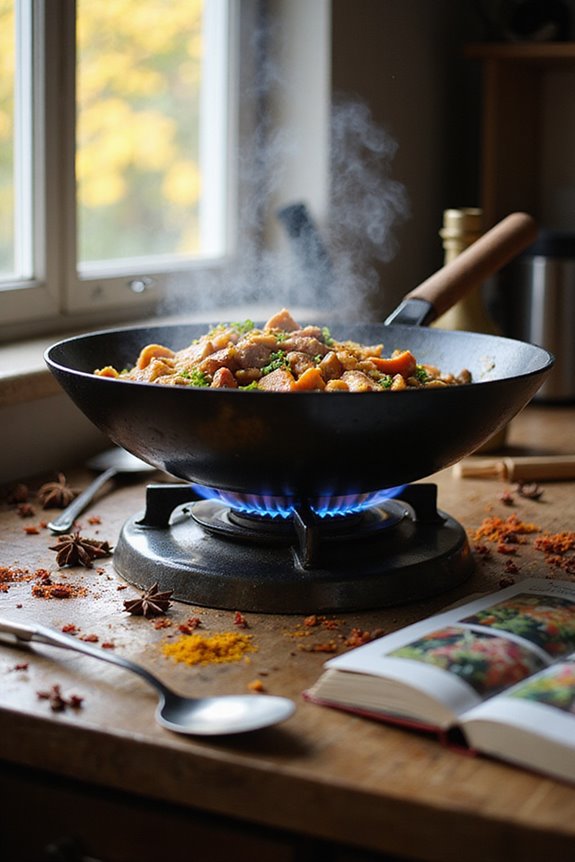
When it comes to stir-frying, we should aim for a wonderful temperature between 250°F and 300°F. This range helps us release the magical Maillard reaction, enhancing flavors while keeping our ingredients from burning or getting soggy. Here’s a tip: always preheat the wok until it’s ripping hot before adding oil. Using a high-smoke oil, like avocado, makes a delightful difference! Stick around, and we’ll share even more sizzling secrets for perfect stir-frying.
Key Takeaways
- Aim for an oil temperature between 250°F to 300°F for optimal stir-frying results.
- Proper temperature achieves the Maillard reaction, enhancing flavors and textures.
- Ensure ingredients are at room temperature to maintain heat during cooking.
- Monitor heat levels to prevent burning or soggy ingredients while cooking.
- Adjust the heat dynamically based on the proteins and vegetables being used.
Ideal Temperature Range for Stir-Frying
When it comes to stir-frying, getting the temperature just right is like crafting a delightful holiday treat—it’s all about balance! Ideally, we want our oil heated between 250°F and 300°F. This magical range helps achieve the Maillard reaction, creating those delicious flavors we all crave. If it’s too hot? Oops, we risk burning our favorite ingredients. Too cold? They’ll get all soggy instead of crisp!
For fantastic stir frying techniques, make sure we prep our ingredients to be at room temperature. This way, they won’t steal that crucial heat from the wok. Remember, keeping the oil at the right temp not only enhances flavor but also makes our culinary creations shine with delightful textures! Additionally, using a carbon steel wok ensures even heat distribution, which is essential for achieving that perfect stir-fry. Happy cooking, team!
The Role of Wok Heat in Cooking
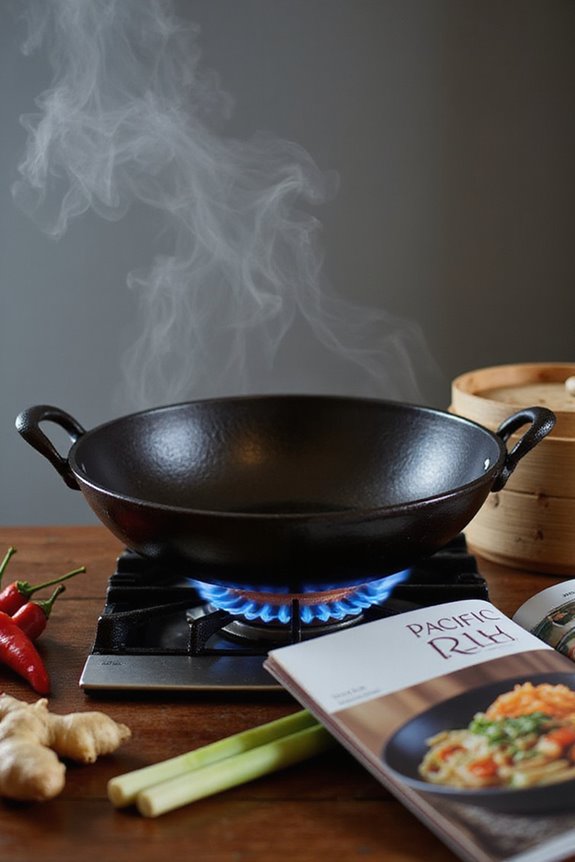
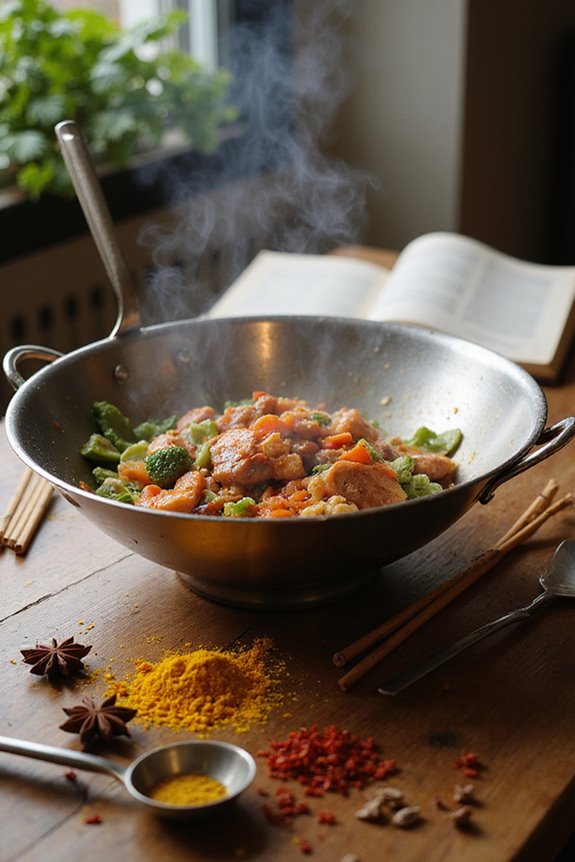
To create culinary magic in our kitchens, understanding the role of wok heat is absolutely vital! A well-heated wok lets us explore delightful cooking dynamics. The bottom gets extremely hot, perfect for searing and developing flavors. Meanwhile, the edges are cooler—ideal for keeping food at just the right doneness without burning.
When we add ingredients, the wok temporarily loses heat. But don’t worry! It recovers quickly, letting us cook our next batch in no time.
- High wok temperature is a must for preserving color and nutrients.
- Constantly stirring guarantees even cooking across those heat zones! Additionally, a recommended wok diameter of at least 14 inches enhances heat distribution and cooking efficiency.
Recommended Products

GENUINE TASTE: Bring rich, traditional Asian flavors to your kitchen or campsite. The YOSUKATA 14-inch carbon steel authentic wok with round bottom is specially crafted to lock in moisture and flavor. Ideal for Chinese and Japanese cuisine, this xl wok is designed for use as a camping wok, open fire cookware and BBQ wok
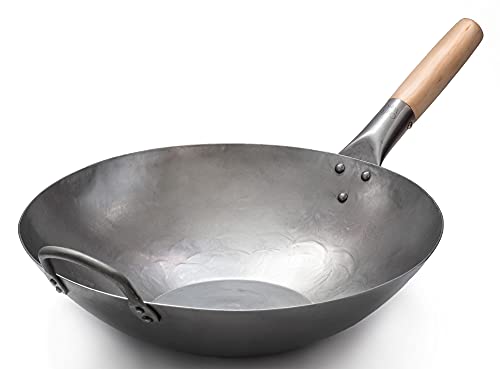
Flat Bottom Heavy 14 Inch 15 gauge (1.8mm) carbon steel wok, commercial grade. Original design by Craft Wok since 2014, proven quality over the years. Chinese wok pan with a flat bottom for electric and gas stoves.

PRODUCT BASICS: Round Bottom Heavy 14-Inch, 15-gauge (1.8mm) carbon steel wok, commercial grade. Original design by Craft Wok since 2014, with proven quality over the years. Chinese iron wok pan featuring a round bottom for home gas stovetops, professional wok jet turbo fast burners, open fire, BBQ, grills.
Importance of Oil Selection and Smoke Points
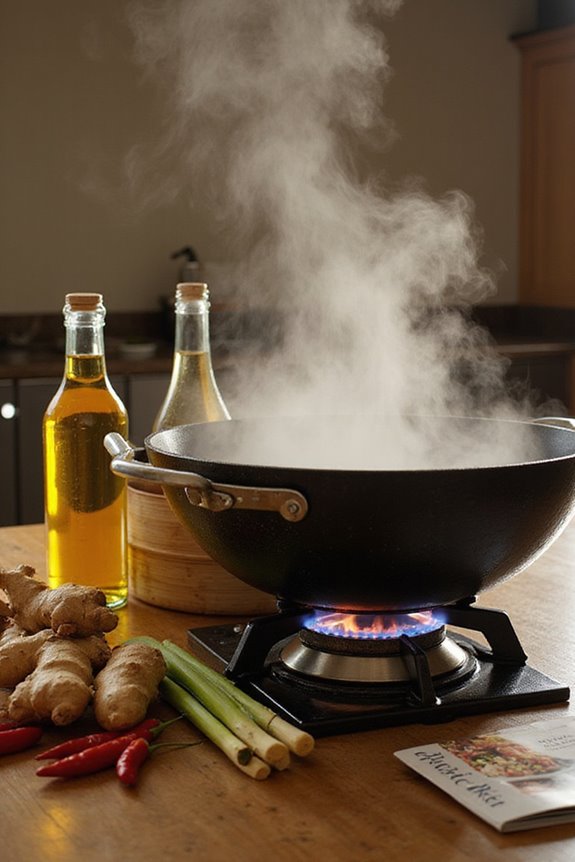
After getting the wok nice and hot, the next delightful step is choosing the right oil! Selecting the right oil types is essential for a successful stir-fry. Let’s remember these high smoke point champions:
- Refined Avocado Oil: A heart-healthy favorite with a smoke point of 480-520°F.
- Peanut Oil: Offers a nutty flavor and a high smoke point, making our dishes sing!
- Canola Oil: Its neutral taste is versatile, and it’s perfect at around 400°F.
These oils help preserve nutritional benefits, avoiding those nasty free radicals. So, let’s keep our flavors stable and our dishes vibrant. A magical stir-fry starts with the right oil choice—making our cooking adventures deliciously memorable! Additionally, considering oils like cold-pressed sesame oil can also enhance flavors while providing health benefits.
Recommended Products

Graza Frizzle Oil Made from 100% Olives: A neutral-flavored, high heat cooking oil made from 100% peak harvest olives. With a smoke point of up to 450 degrees, Frizzle is your high-heat kitchen hero. 1 bottle/750ml.

Light Buttery Flavor That Elevates Every Meal: Algae Cooking Club Chef-Grade Algae Oil enhances every dish with subtle richness. Its neutral profile makes it ideal for searing, baking, and dressings, transforming everyday meals into gourmet experiences.

100% GRAPESEED OIL BULK SIZE: Expertly crafted by The Olive Oil People using wine grape seeds imported from France
Effects of Cooking Temperature on Food Flavor
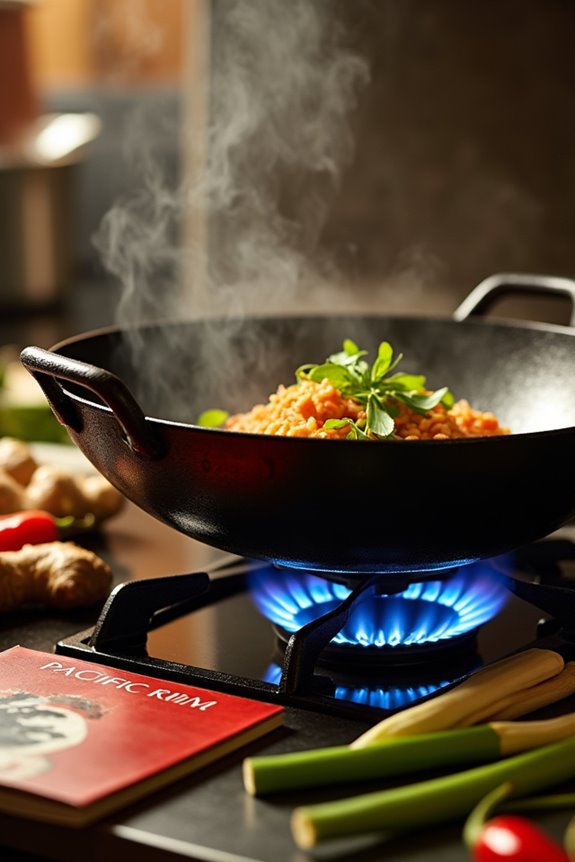
Cooking at the right temperature can be the secret ingredient to revealing amazing flavors in our stir-fry dishes! When we stir-fry, we can release delightful taste transformations. Here’s how temperature sensitivity plays a role in flavor enhancement:
- Sweetness & Umami Surge: Cooking between 15-35°C boosts sweet and savory profiles.
- Magic of Caramelization: High heat caramelizes sugars, creating mouthwatering depth, but we must watch for burning!
- Perfectly Cooked Proteins: Keeping proteins at 130-135°F maintains juiciness, while too much heat can lead to dryness.
- Vegetable Vibrance: High temps make veggies sweet, so let’s avoid overcooking for ideal crunch!
Additionally, using Thai curry paste can enhance the overall flavor profile of stir-fried dishes with authentic Thai flavors that complement the cooked ingredients perfectly!
Techniques to Maintain Optimal Stir-Fry Heat
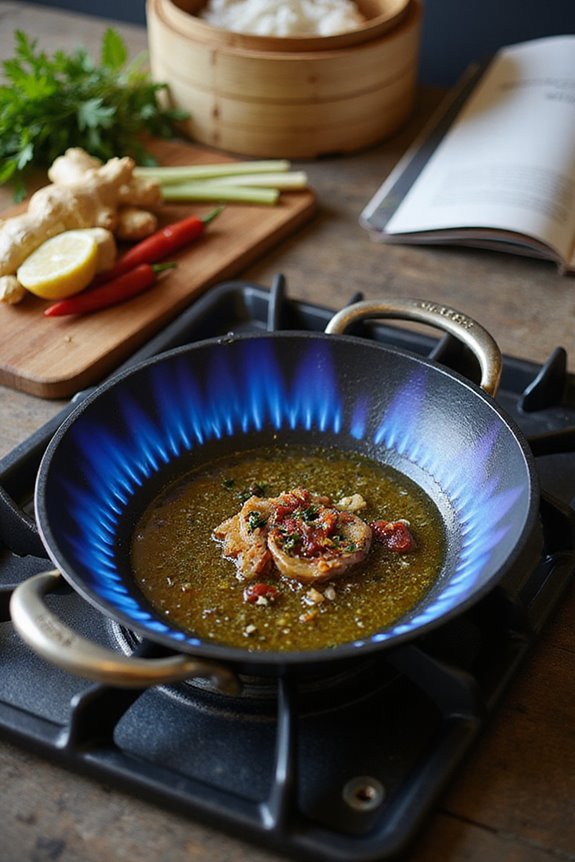
Keeping our wok at the right temperature while stir-frying can feel like a magical dance of flavors! To guarantee heat retention, we need to preheat our wok until it’s ripping hot before adding oil. This prevents sticking and creates that delightful nonstick surface. Timing is key: let’s add our aromatics after the oil is heated to infuse the flavors without burning!
Here are some handy tips:
- Spread ingredients evenly in a single layer to promote searing, not steaming.
- Push the cooked food to the wok sides for gentle heat.
- Adjust the heat dynamically; keep proteins sizzling and let veggies chill slightly.
- Using high-grade materials in our utensils, like those found in premium kitchen tools, can further enhance our cooking performance.
With these techniques, our stir-fry will be deliciously cooked to perfection in no time!
Recommended Products

PRE-SEASONED FOR IMMEDIATE USE - Sizzling stir frys, crispy deep frys, pan-searing to perfection.... while also able to make soups and stews!

【PRE-SEASON & NATURALLY NONSTICK】Crafted from premium carbon steel, our woks and stir-fry pans deliver exceptional performance. Once properly seasoned, the natural nonstick surface ensures smooth food release for hassle-free cooking. Pre-seasoned at over 1000°F through advanced nitrogen treatment, these pans offer remarkable strength, superior wear resistance, and excellent protection against corrosion.

[Upgrade Modern Non-Stick Technology] After a long time of research and development, we have developed a new non-stick wok technology to bring you a brand new cooking experience. NOTE: The rough and granular effect on the surface of the wok is a natural non-stick layer formed by the state-of-the-art non-stick technology, which prevents food from sticking to the pan, burning, rusting and is easy to clean
Understanding Burner and Stove Considerations
When it comes to stir-frying, understanding our burner and stove choices can take our culinary adventure to the next level! Here’s what we need to know about burner types and heat retention:
- Gas Burners: They’re our best friends! They heat quickly and let us control heat like a pro.
- Electric & Induction Stoves: They might be a bit tricky. We’ll have to experiment to find our sweet spot for stir-frying. Additionally, investing in high-quality tools like a PAUDIN Nakiri Knife can enhance our slicing and dicing efficiency, making preparation a breeze.
Recommended Products

Concord Professional 16" Stronghold burners are capable to putting out up to 270,000 BTU and are built like tanks. This is part of our professional series, suitable for food trucks, street vendors, and some serious outdoor cooking.
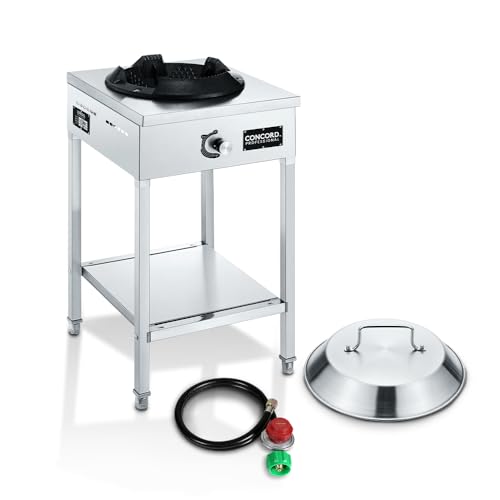
Concord's commercial grade full stainless steel frame wok burner features an enamel coated built in wok mount. Wok sits directly on top which allows for easy tossing and flipping motion when you stir fry.

[Wok Set & Cookwares] - KAQINU 14 piece wok pan set includes wok pan with lid, wok spatula, wok brush, wok ring, drain oil rack, chopstick, slotted spatula, spaghetti spoon, slotted spoon, rice spoon, soup ladle, carving fork and apron. Owning this all-in-one Chinese wok pan, make cooking easier, faster and more efficient, then your cooking life will be more handy.
Impact of Food Quantity on Temperature Control
Understanding how the quantity of food impacts temperature control is essential for achieving that delightful stir-fry magic we all love! Cooking small batches lets us maintain even heat distribution, helping prevent overcooking. Here’s how we can boost our cooking efficiency:
- Heat-to-Weight Ratio: Less food equals better temperature control.
- Stir-Fry Techniques: Stir quickly when cooking larger amounts to guarantee consistent heat.
Safety Tips for High-Temperature Cooking
High-temperature cooking can be a thrilling culinary adventure, especially when we aim for that delightful stir-fry! To keep our kitchen escapades safe, let’s get familiar with some essential safety tips. First, remember our safety equipment, like oven mitts and heat-resistant surfaces. Next, emphasizing cooking hygiene is vital; wash your hands often when handling raw foods.
Here are some key points:
- Cook foods to at least 75 °C (that’s about 165 °F!).
- Don’t let high-risk foods lounge in the danger zone (40 °F to 140 °F) for over 2 hours—no relaxing here!
- Always separate raw and cooked ingredients to prevent cross-contamination.
With these tips, we’re ready to stir-fry our way to success! Happy cooking!
Managing Heat for Different Ingredients
Ready to plunge into the magical world of managing heat for various ingredients? It’s all about ingredient timing and heat adjustment!
Recommended Products

DURABLE: Made from BPA-free matte black silicone

Helen’s Asian Kitchen Bamboo Wok Tool for stirring, mixing, dividing, tasting, turning, and serving foods

Helen's Asian Kitchen Bamboo Stir Fry Spatula: Natural bamboo cooking utensil for stirring, mixing, dividing, tasting, turning, and serving stir fry, rice, noodles, vegetables, and sauces
Getting Started
- High Heat for Searing: Start that wok hot, above 400°F (200°C). This gives meat a delightful sear in about 3-5 minutes.
- Veggie Bliss: Toss in those colorful veggies next! They thrive on high heat for quick cooking while we avoid mushiness.
Saucy Layers
– As we add sauces, remember to lower the heat slightly. This prevents any scorching and keeps everything flavorful.
Quick Tips
– Keep stirring—think of it like dancing a joyful jig in the kitchen! And remember, our wok retains heat, so move those dishes to plates promptly for the best results. Happy stir-frying!
Common Mistakes to Avoid While Stir-Frying
While managing heat is key to perfect stir-frying, avoiding common mistakes can make a big difference in our tasty triumphs! Here are a few delightful tips to keep in mind:
- Ingredient Preparation: Cut ingredients uniformly; uneven sizes lead to inconsistent cooking. Think festive cookie cutters!
- Pan Selection: Choose a flat-bottomed wok for heat maintenance. It’s your trusty holiday baking dish!
- Cooking Order: Start with proteins, followed by aromatics, and finish with delicate veggies for magical flavor development.
- Oil Application: Use high-smoke oils, like avocado, to prevent burning—no one wants a charred Christmas cookie!
- Overcrowding Effects: Cook in stages. Overcrowding turns our stir-fry into a sad, steamy mess.
Let’s stir-fry our way to deliciousness!
Can I Stir-Fry Without a Wok?
Absolutely, we can stir fry without a wok! Using a frying pan, we’ll apply stir fry techniques effectively. Just remember to manage heat and ingredients well, and we’ll create delicious meals together!
How Do I Know When Oil Is Hot Enough?
To know when oil’s hot enough, we can watch for shimmering or drop a bit of food in; it should sizzle immediately. Mastering these cooking techniques helps us elevate our stir-fry game together!
What Are Common Vegetables to Stir-Fry?
It is understood it might feel overwhelming to choose vegetables for stir-frying, but with our stir fry techniques, we can blend vibrant combinations like bell peppers, broccoli, and snap peas for a delicious, colorful dish everyone will love.
Can I Use Olive Oil for Stir-Frying?
Yes, we can absolutely use olive oil for stir-frying! Its benefits include antioxidants, and its smoke point allows for high-heat cooking. By choosing the right type, we enhance both flavor and health in our dishes together!
How Do I Clean My Wok After Use?
After our culinary adventures, we can embrace our wok’s care like nurturing a garden. With gentle cleaning techniques and regular wok maintenance, we’ll guarantee it thrives, enhancing our shared cooking experiences for years to come.